

Axis Camera Types
Axis camera types refer to professional IP camera categories selected according to different risk levels, environments, and security objectives in enterprise deployments. The goal is not simply “install cameras,” but to achieve the required level of detection, recognition, or identification across key zones, improve incident response, and operate the system sustainably over time. Axis Communications provides multiple form factors, optical options, and feature sets that support these objectives in real-world B2B projects.
At TISI, we explain camera types through practical value: where each type performs best, how to select it based on design parameters, and how it fits into an enterprise security architecture. The right type selection impacts image outcomes, operational efficiency, and long-term total cost of ownership.
Why Camera Types Matter in Enterprise Projects
Two cameras with the same resolution can deliver completely different results if they belong to different categories and are deployed in different conditions. For example, a PTZ may be ideal for dynamic monitoring of a wide outdoor yard, while a fixed dome camera may be the correct choice for an entrance where consistent capture is required. Environmental factors (weather, dust, vandalism), mounting height, lighting, and infrastructure constraints (PoE budget, network capacity) drive the final selection. The best enterprise outcomes often come from a hybrid design that combines multiple types strategically.
1) Dome Cameras (Indoor and Vandal-Resistant Use)
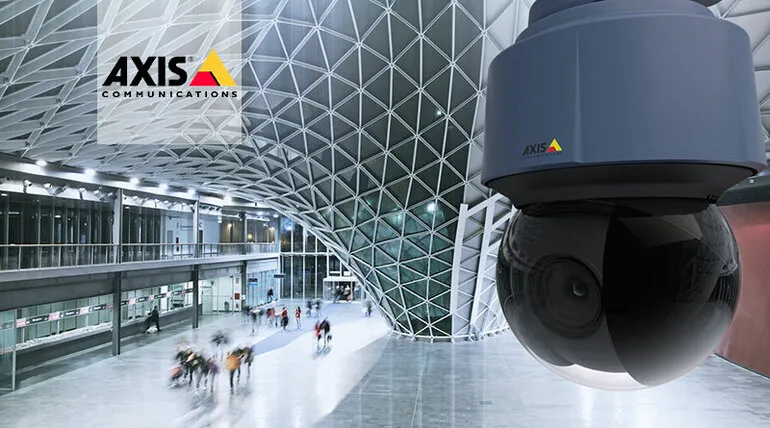
Axis dome cameras are among the most commonly used types due to their compact design and wide applicability. They are often deployed indoors in offices, hospitals, retail spaces, corridors, and entrances. Dome housings can offer deterrence because the viewing direction is less obvious. Vandal-resistant models help reduce damage risk in public or high-traffic areas.
- Best for: entrances, corridors, reception areas, elevator lobbies
- Advantages: aesthetics, durability, wide field-of-view options
- Considerations: mounting height, lens selection, reflections/lighting
2) Bullet Cameras (Outdoor and Long-Range Monitoring)
Axis bullet cameras are designed for outdoor environments and typically feature an elongated housing suitable for perimeter and exterior coverage. They are widely used around warehouses, building exteriors, parking lots, and yard areas. The visible orientation can provide strong deterrence. For outdoor use, proper environmental protection and installation practices are essential to maintain stable performance.
- Best for: exterior walls, perimeter zones, vehicle entrances, open-area monitoring
- Advantages: outdoor durability, strong long-range performance
- Considerations: IR reflections, mounting angle, cable protection
3) PTZ Cameras (Pan-Tilt-Zoom for Dynamic Coverage)
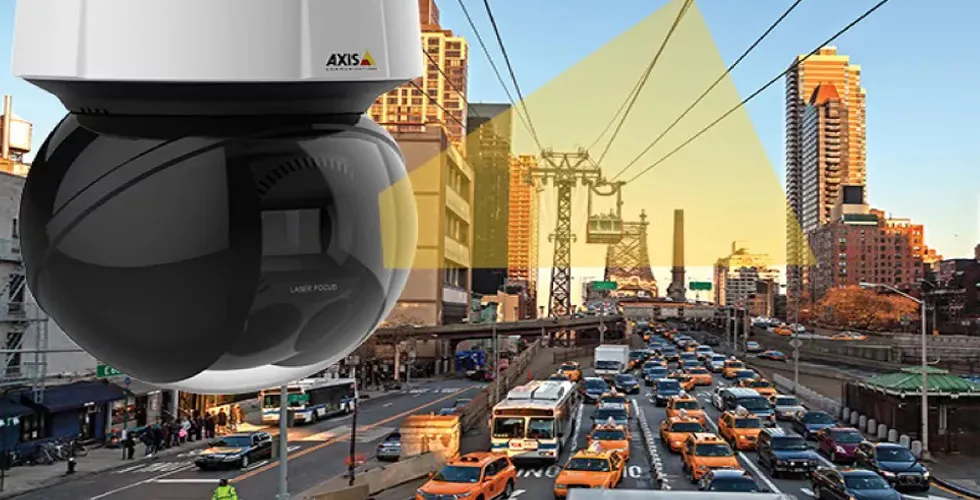
Axis PTZ cameras provide motorized pan, tilt, and optical zoom capabilities, enabling dynamic monitoring of wide areas using a single camera. Typical use cases include large campuses, logistics yards, ports, city surveillance, and critical infrastructure. PTZ value depends on operational design: presets, patrol tours, alarm-driven auto-tracking, and operator training must be planned properly. Otherwise, the camera may not be looking at the right place at the right time.
- Best for: wide outdoor areas, critical zones, control-room operations
- Advantages: broad coverage, optical zoom for details
- Considerations: blind spots, operator dependency, preset design
4) Thermal Cameras (Detection Independent of Visible Light)
Axis thermal cameras detect heat differences rather than relying on visible light. This makes them extremely valuable in perimeter and critical infrastructure projects, especially under low-light conditions, fog, or challenging weather. Thermal imaging is primarily used for detection and early warning, not facial identification. Design success depends on correct detection-distance planning and scenario calibration.
- Best for: perimeter protection, critical infrastructure, open environments
- Advantages: stable detection in low light and harsh weather
- Considerations: scenario design, detection range planning
5) 360° Fisheye Cameras (Wide Coverage from a Single Point)
360° fisheye cameras deliver wide-area coverage from a single mounting location. They are frequently used indoors in lobbies, open offices, and warehouse intersection points. Best results require proper mounting strategy and VMS de-warping workflows to convert fisheye views into usable perspectives for operators.
- Best for: lobbies, open offices, warehouse junctions
- Advantages: wide coverage, reduced blind spots
- Considerations: de-warp management, mounting height
6) Specialized Axis Cameras (LPR/ANPR, Body Worn, Ex-Proof, etc.)
Enterprise projects often require cameras beyond standard form factors. License plate recognition (LPR/ANPR) deployments require specific design and integration. Hazardous environments may require explosion-proof solutions. Mobile security operations may require body worn devices. In these projects, success depends as much on workflow and software integration as on hardware selection. TISI documents requirements and aligns product and software components accordingly.
How to Select Axis Camera Types (TISI Integrator Approach)
TISI’s selection method starts with zoning the site by risk level and defining the objective for each zone. We then evaluate lighting, mounting positions, optics, and infrastructure constraints. This results in a hybrid architecture that balances performance and cost.
- Objective: detection / recognition / identification
- Environment: indoor/outdoor, vandal risk, weather conditions
- Operations: control room availability, alarm workflows
- Infrastructure: PoE budget, network capacity, retention/storage requirements
- Integrations: access control, alarms, analytics, LPR workflows
Axis Projects with TISI: Design, Installation, and Support
TISI delivers Axis camera deployments as engineered systems: assessment, design, installation, commissioning, and long-term technical support. If you need a project-specific recommendation on Axis camera types and selection criteria, contact TISI for a tailored solution proposal.