

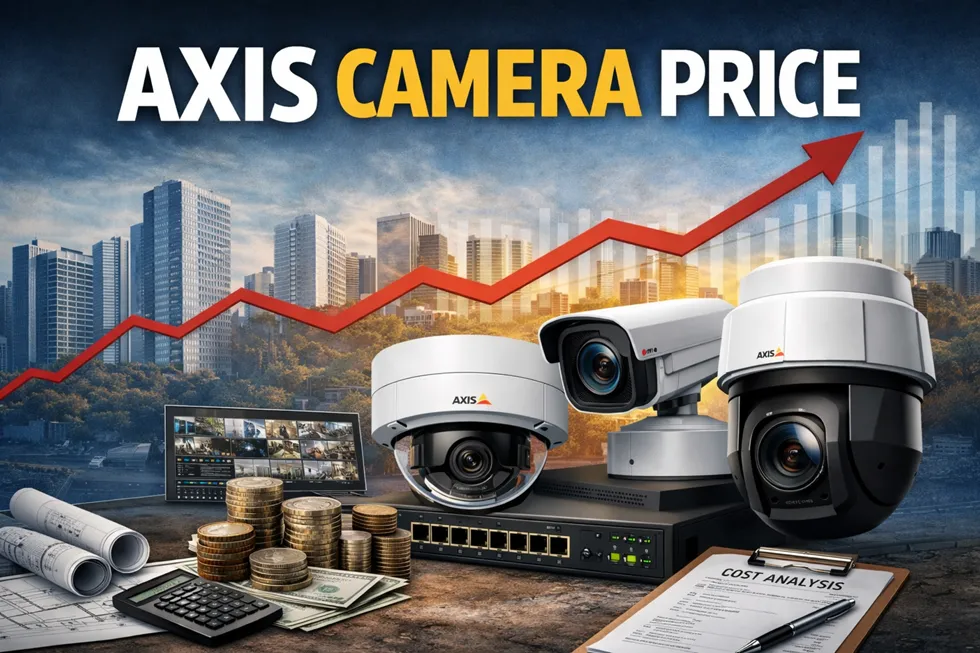
Axis Camera Price
Searching for Axis camera price usually means more than looking for a single device tag. Most organizations want to
budget correctly, select the right model for the right scenario, and avoid unnecessary costs. Axis Communications is positioned as a
global reference brand for enterprise IP video, typically selected for B2B projects where continuity, imaging performance,
cybersecurity alignment, and long-term maintainability matter more than the lowest upfront purchase price.
On this page, TISI addresses both search intents behind “Axis camera price”:
(1) Informational intent—what technical and project parameters define the price?
(2) Commercial intent—how can you get a quote that matches your site and optimize cost without sacrificing outcomes?
In enterprise deployments, price includes cameras plus network infrastructure, recording/storage, software licensing, labor, commissioning,
and acceptance testing.
Why Axis Camera Price Cannot Be a Single Number
The right question is not “How much is an Axis camera?” but “How much is an Axis camera system designed for our site?”
Within the Axis portfolio, resolution, sensor class, optics, housing (indoor/outdoor), low-light requirements, analytics scope,
cybersecurity requirements, and support expectations change the final range. As the number of cameras grows, network sizing (PoE budget),
storage capacity, and VMS licensing become major cost drivers.
10 Factors That Determine Axis Camera Price
The following are the primary drivers of the overall price range. TISI’s integrator approach focuses on choosing what is necessary to
achieve the objective—no more, no less.
- Camera type: dome, bullet, PTZ, thermal, 360°/fisheye
- Resolution and sensor class: Full HD / 4K and beyond; sensor suitability for the scene
- Optics and field of view: fixed/varifocal lens, narrow vs wide view
- Low-light requirements: night performance can shift device class
- Outdoor durability: environmental rating, vandal resistance, temperature range
- Analytics scope: intrusion/line crossing/loitering scenarios and commissioning effort
- Cybersecurity requirements: governance, segmentation, access control processes
- Retention policy: how many days of recording define storage size
- VMS and licensing: management software, users, multi-site operations
- Labor and commissioning: installation, configuration, testing, acceptance
Enterprise Cost Structure: Beyond the Camera Device
Many people searching “Axis camera price” focus only on the camera device. In enterprise projects, total cost is often shaped by
infrastructure and operational layers. For example, in a 30–50 camera deployment, PoE switch sizing, uplink capacity,
VLAN design, and recording/storage infrastructure can approach the camera layer cost. TISI structures proposals into clear layers:
- Camera layer: correct type + optics matched to the objective
- Network layer: PoE switching, segmentation, secure access
- Recording & storage: retention, redundancy, performance
- Software (VMS): monitoring, permissions, reporting, alarm workflows
- Deployment: installation, commissioning, acceptance testing
Scenario-Based Examples That Affect Price
Understanding cost starts with defining the scenario. Below are common enterprise needs and how they influence the overall price:
- Entrance identification: narrow optics and optimized placement may require a higher camera class.
- Outdoor perimeter/parking: low-light and environmental requirements influence housing and sensor selection.
- Wide yard monitoring: PTZ may increase unit cost while reducing the number of devices needed in some designs.
- Early warning perimeter: thermal + analytics scenarios may increase commissioning effort and design complexity.
Axis Camera Price vs Total Cost of Ownership (TCO)
The correct enterprise evaluation method is TCO (Total Cost of Ownership). Axis may require a higher upfront investment, but it can deliver
long-term value through reliability, reduced maintenance burden, operational continuity, sustained software support, and cybersecurity alignment.
In security, the cost of downtime is often higher than the cost of devices. That is why TISI evaluates Axis projects through a risk-and-continuity lens,
not only through purchase price.
How to Get an Accurate Axis Camera Quote (TISI Process)
The most accurate quote is based on site assessment and system design. TISI’s standard process:
- Site assessment: zoning, lighting, infrastructure baseline
- Objectives: detection / recognition / identification targets
- Architecture design: camera types, optics, placement drawings
- Network & recording plan: PoE, VLANs, storage, redundancy, retention
- Quotation: itemized costs and alternative solution scenarios
How to Reduce Cost the Right Way
In enterprise projects, cost reduction should not mean lowering outcomes. TISI typically optimizes cost through:
- Risk-based zoning: premium devices where needed, optimized choices elsewhere
- Correct optics strategy: avoid unnecessary resolution by matching lens/field of view to objectives
- Recording optimization: motion-based recording, balanced FPS/bitrate planning
- Infrastructure balancing: right-size PoE and uplinks to real traffic and expansion plans
Conclusion: The Best Way to Approach Axis Camera Price
The most accurate answer to “Axis camera price” depends on your objectives and site conditions.
With TISI’s assessment and engineered architecture, you can achieve the required imaging outcomes while keeping the budget efficient.
Contact TISI for a project-specific quote and alternative solution scenarios.
Frequently Asked Questions
Why can Axis camera price be higher than other brands?
Enterprise quality expectations, long-term maintainability, software ecosystem, cybersecurity practices, and continuity requirements may influence price.
Can I know the price without getting a quote?
A rough range is possible, but accurate pricing requires clarity on camera type, environment, retention, and infrastructure needs.
What cost item increases the budget most?
It depends, but outdoor durability, analytics scope, long retention periods, and VMS/licensing often become major cost drivers.