

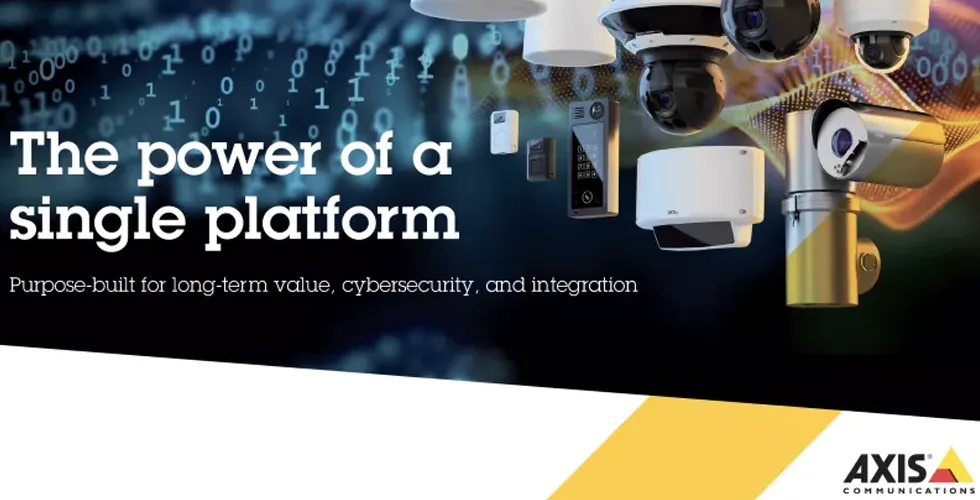
Benefits of Axis Cameras
The benefits of Axis cameras are best understood in enterprise (B2B) security projects where the objective is not merely recording video, but managing risk, improving operational continuity, and enabling proactive incident response. While the IP surveillance market includes many options, Axis Communications is widely considered a reference brand in network video. Axis solutions are therefore often selected for deployments that prioritize reliability, quality, scalability, and cybersecurity rather than simply minimizing upfront cost. In environments such as healthcare, industrial plants, logistics hubs, campuses, and public institutions, the long-term value of the surveillance system matters as much as the initial installation.
At TISI, we position Axis camera advantages through real operational impact. Features only deliver value when the system is engineered correctly: proper camera selection, placement, network and storage planning, VMS integration, and incident workflows. Below we summarize the key benefits of Axis cameras and explain why they matter for enterprise security operations.
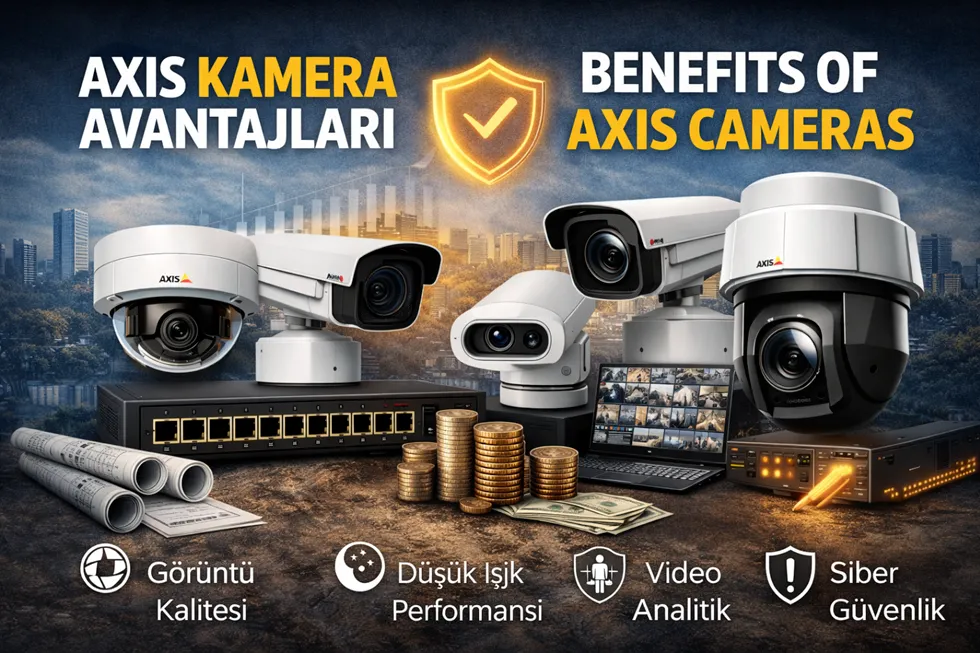
1) Enterprise-Grade Imaging and Detail Capture
In enterprise environments, image quality is not just “sharp video.” It enables identification, supports evidence-grade recordings, and speeds up investigations. Axis cameras offer multiple resolution and optical options that can be optimized to match specific security objectives. With correct design, critical areas can achieve identification-level performance where it matters most.
2) Low-Light Stability and Performance in Challenging Conditions
Many high-risk zones become more vulnerable under low lighting: parking areas, perimeters, yards, energy facilities, and night-shift production sites. A major Axis camera benefit is stable imaging in low light, with reduced noise and improved contrast. This helps security teams respond faster and make better decisions during real incidents.
3) Proactive Security with Video Analytics
Modern security is moving from reactive review to proactive detection. Axis camera benefits become stronger when analytics are deployed correctly. Intrusion detection, line crossing, area monitoring, and loitering analytics reduce the burden of constant manual monitoring and improve response time. From an integrator perspective, calibration is essential: poorly tuned analytics can generate excessive false alarms and reduce operator trust.
TISI treats analytics as an operational component: we test scenarios on site, fine-tune thresholds, and design alarm workflows to make analytics actionable instead of distracting.
4) Integration Flexibility and Open Ecosystem
Enterprise surveillance rarely operates alone. It integrates with access control, intrusion alarms, license plate recognition, fire systems, building management, and control-room operations. Axis solutions support integration-driven architectures, allowing organizations to build advanced workflows without locking into a single vendor ecosystem. This flexibility supports future expansions and protects existing investments.
5) Cybersecurity and Alignment with IT Standards
IP cameras are network-connected endpoints, which makes cybersecurity a core requirement. A key benefit of Axis deployments is the ability to build architectures aligned with corporate security practices: access governance, authentication methods, secure remote access, update governance, and logging. TISI typically implements segmentation (VLAN), controlled access, and documentation practices to support audits and reduce attack surfaces.
6) Scalability: Smooth Expansion as the Project Grows
Enterprise environments evolve. New buildings, warehouses, production lines, and sites may be added over time. Axis camera benefits include scalable IP architecture that supports expansion without redesigning the entire system. With proper network and VMS planning, new devices, user groups, and monitoring stations can be added smoothly.
7) Total Cost of Ownership (TCO) Perspective
Axis may require a higher initial investment compared to price-driven alternatives, but it can deliver long-term value through reduced failure rates, lower maintenance burden, operational continuity, and sustained software support. In enterprise security, the cost of downtime is often far greater than device price. That is why TISI evaluates Axis deployments through a risk-and-continuity lens, not only through upfront procurement cost.
8) Operational Manageability and Central Control
As deployments scale, centralized governance becomes essential. With appropriate VMS design, Axis systems support role-based permissions, incident workflows, reporting, and multi-site operations. This helps security teams move from “watching screens” to “managing incidents” with standardized procedures. TISI designs monitoring layouts and workflows aligned with the organization’s operating model.
Maximize Axis Camera Benefits with TISI
Axis camera benefits reach their full value when the system is engineered properly. TISI starts with site assessment and requirement analysis, defines risk zones, selects camera types and optics, plans network and storage, designs analytics scenarios, and implements cybersecurity best practices. Commissioning and acceptance testing validate performance, while training and support ensure sustainable long-term operations.
Frequently Asked Questions
Why are Axis cameras commonly selected for enterprise projects?
Their imaging reliability, scalability, integration flexibility, and cybersecurity alignment make them suitable for long-term enterprise security needs.
Are Axis camera benefits the same for every project?
No. Benefits depend on architecture and scenario design. Integrator engineering and commissioning determine real-world performance.
How should Axis cameras be evaluated from a cost perspective?
Evaluate total cost of ownership (TCO), including operational continuity and downtime risk, rather than device price alone.