

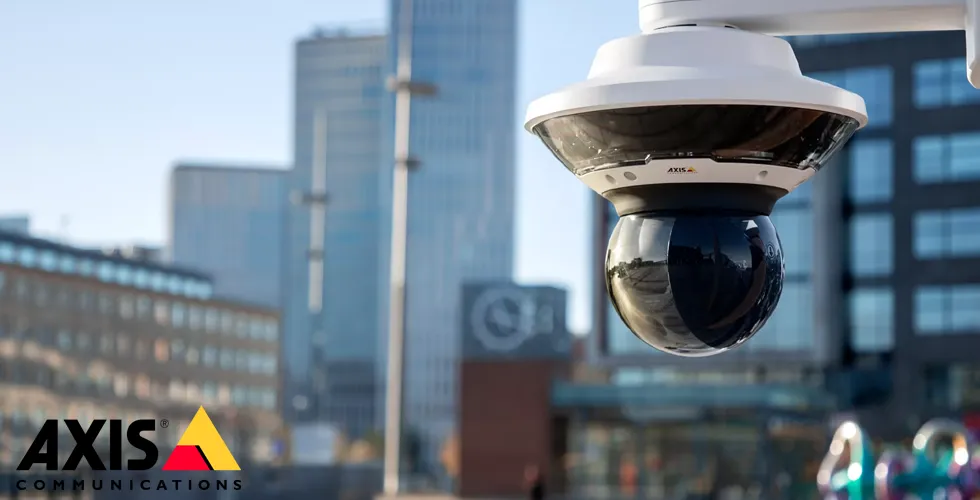
Axis Camera Features
Axis camera features are designed for enterprise-grade security projects where the requirements go far beyond basic recording. In B2B environments, security teams need reliable imaging, scalable management, analytics-driven workflows, and strong cybersecurity posture. Axis Communications is widely recognized as a reference brand in IP-based (network) video, which is why Axis cameras are commonly selected for projects that prioritize quality, operational continuity, manageability, and long-term total cost of ownership rather than simply the lowest initial price.
At TISI, we treat camera capabilities as part of a complete system. Real-world performance depends not only on the camera’s specification sheet but also on correct placement, lens strategy, bandwidth and bitrate planning, recording architecture, and VMS integration. Below, we break down the most important Axis camera features and explain why they matter in enterprise deployments.
1) Image Quality and Resolution
In enterprise security, image quality means more than “sharp video.” It supports identification, faster incident review, and better operational awareness. Axis cameras offer a range of resolutions from Full HD to 4K and beyond, enabling different design strategies for different zones. However, resolution alone is not enough. Optics, field of view, installation height, and lighting conditions determine whether the captured video will actually meet the security objective.
2) Low-Light Performance and Night Imaging
Many critical areas operate under challenging lighting: parking lots, warehouse corridors, perimeter zones, and night-shift production areas. A key Axis camera feature is the ability to maintain stable imaging in low light, helping reduce noise, preserve contrast, and improve the chance of successful identification during incidents. Strong low-light performance often becomes a decisive factor for mission-critical deployments.
3) Video Compression, Bitrate Control, and Storage Efficiency
IP video projects must balance bandwidth, storage, and quality. Axis cameras support modern compression options and bitrate optimization mechanisms that help reduce network load and storage costs without compromising the required level of detail. For enterprise projects, the goal is rarely “maximum quality everywhere.” Instead, it is to build an optimized quality–cost balance based on risk levels and operational needs across the site.
4) Video Analytics and Intelligent Workflows
Axis camera features become significantly more valuable when analytics are deployed correctly. Analytics can trigger alerts for scenarios such as line crossing, area intrusion, loitering, or abnormal movement patterns. This reduces the burden of continuous manual monitoring and enables faster response. From an integrator perspective, the key is calibration: analytics must be tuned to the environment to avoid excessive false alarms that could reduce trust in the system.
5) Cybersecurity and Enterprise Reliability
IP cameras are network-connected endpoints, which makes cybersecurity a core selection criterion. Enterprise deployments often choose Axis due to its security-focused engineering approach. Access control practices, authentication options, password policies, and consistent update discipline support alignment with corporate IT security standards. In many organizations, cybersecurity readiness is a non-negotiable requirement for approving any surveillance platform.
6) Integration and Open-Platform Compatibility
In B2B projects, cameras rarely operate as isolated devices. They are integrated into access control, alarms, license plate recognition, fire systems, building management platforms, and control room procedures. Axis cameras are designed for integration, helping organizations avoid vendor lock-in and enabling future expansion as operational needs evolve.
7) Durability, Housing Options, and Field Suitability
Real deployments involve real environments: outdoor weather exposure, dust, temperature swings, vandalism risk in public spaces, and industrial conditions such as vibration or chemical exposure. Proper housing and mounting choices reduce failure rates and lower long-term maintenance costs. Selecting the right form factor for each zone is a practical yet essential feature of a successful design.
8) Centralized Management and Operational Efficiency
Operational management is a major cost factor in enterprise security. Monitoring hundreds of cameras manually is not efficient. Axis deployments, when built with the right software architecture, enable centralized monitoring, role-based permissions, recording policies, and reporting workflows. This helps security teams move from “watching screens” to “managing incidents” with measurable efficiency gains.

Axis Camera Systems with TISI: Engineering-Driven Feature Selection
TISI designs Axis camera solutions based on the organization’s security objectives, risk zones, and operational workflows. We start with site assessment and requirement analysis, then define camera types and optics, plan bandwidth and storage, and complete commissioning and acceptance testing. The result is a stable, scalable, and cybersecurity-aligned security infrastructure built for long-term enterprise use.
Frequently Asked Questions
What is the most important Axis camera feature?
It depends on the project, but enterprise imaging performance, manageability, and cybersecurity posture are often the top priorities.
Do all projects need video analytics?
Not necessarily. Analytics provide high value in the right scenarios, but must be calibrated properly to avoid false alarms.
How should Axis cameras be selected?
Resolution is not the only factor. The objective (identification vs detection), environment, optics, retention policy, and integration needs should be evaluated together.